CHAPTER 1 — EXHIBITION


Valet staff moved swiftly outside the Tokyo Metropolitan Theatre as Tokyo’s elite stepped into the glow. A black Mercedes pulled up to the curb, its doors opening promptly as a couple stepped out, he in a sharp tailcoat, she adjusting her silk gloves against the lingering chill from a summer storm. Rainwater clung to the glass awning above, catching the glow of streetlights in fractured glints. The storm had broken an hour earlier, leaving the city washed and reflective, as if Tokyo itself had dressed for the occasion.


Inside, the lobby shimmered beneath the theater’s vast glass canopy. A forty-foot banner hung near the mezzanine, announcing a theatrical epic of the year 1999, its bold kanji painted in sweeping brushstrokes. Soft lighting pooled along staircases and alcoves, highlighting curated art displays for the evening’s event.


This year’s auction was hosted by Tokyo’s Governor, Hideo Nakamura, also chairman of the Urban Renewal Subcommittee, a firmly established political figure praised for cultural revitalization, though his alliances remained quietly unexamined. Nakamura’s tall stature loomed over the crowd, moving with the authority of an orchestral conductor as he drifted between auction representatives and staff. He carried the polished veneer of a modern statesman: slicked-back black hair, wayfarer-style glasses perched neatly on the bridge of his nose, and a tailored suit that framed his confidence as much as it concealed his intentions.


At the center of the room stood the auction stage, a draped painting awaiting its moment in the spotlight. Nakamura conferred with the auctioneer and an event host, their laughter echoing through the atrium, a performance as polished as the evening itself.


A pair of couples near the bar murmured in low tones, their conversation drifting toward the night’s benefactor.


“Do you really think he’s putting that money into redevelopment?” one woman asked, swirling her drink.

“Hardly,” her companion said. “He’s servicing other interests. Rumor has it he’s turning the old Shibuya district into a commercial park.”

“No. Not near Hyakkendana? You can’t be serious,” she replied.

The older man gave a knowing nod, a hint of frustration in his eyes.


Somewhere outside, a faint metallic clang echoed, barely audible above the theatre’s grandeur. Inside, the chatter continued undisturbed.


Soft footsteps landed on a fire escape, then vanished as the Unnamed, cloaked in black trackwear and a motorcycle-style gaiter, scaled the building’s exterior with silent precision. The only sign they existed at all was a muted glint of metal at the waistband, and a retracted steel line cinched around their wrists.

A patrolling attendant passed a glass window just as a shadow flickered upward beyond it, unnoticed. The ascent carried on, swallowed by celebratory rhythm.


Onstage, the auctioneer tested the microphone, his mouth pulled wide in a smile. His round cheeks lent him an inviting presence as he courteously offered a series of bows to the audience. He cleared his throat while adjusting his bow tie, then began.


“Friends and colleagues,” came the cordial greeting. “We will now reveal the winners of tonight’s Silent Auction, featuring the Crown Jewel, a one-of-a-kind Kamakura-period painting by Akihiro Haneyume, meticulously preserved and of enormous historical significance. A painting most notable for its unusually advanced treatment of perspective and proportion, which is simply unrivaled for its time.” The auctioneer nodded appreciatively. His frizzy white hair held its immaculate shape, and his silver oval glasses flared with reflected spotlights.


Applause rippled through the crowd as attention turned toward the stage. Nakamura stood beside the Auctioneer, dwarfing him in height, clapping in satisfaction, grin practiced and bright beneath the lights. He nodded back to the Auctioneer in approval.


“But first, we will begin the evening with a magnificent portrait by sixteenth-century Dutch master Frans Hals. The benefactor of this distinguished piece wishes to say a few words…” The auctioneer’s voice carried with rehearsed poise as the velvet cover drew back to reveal the painting. The remaining works awaited their turn, secured within the Gallery Depository down the hall.


Governor Nakamura signaled that he would return shortly, offering a polite nod to a nearby security guard before stepping away.


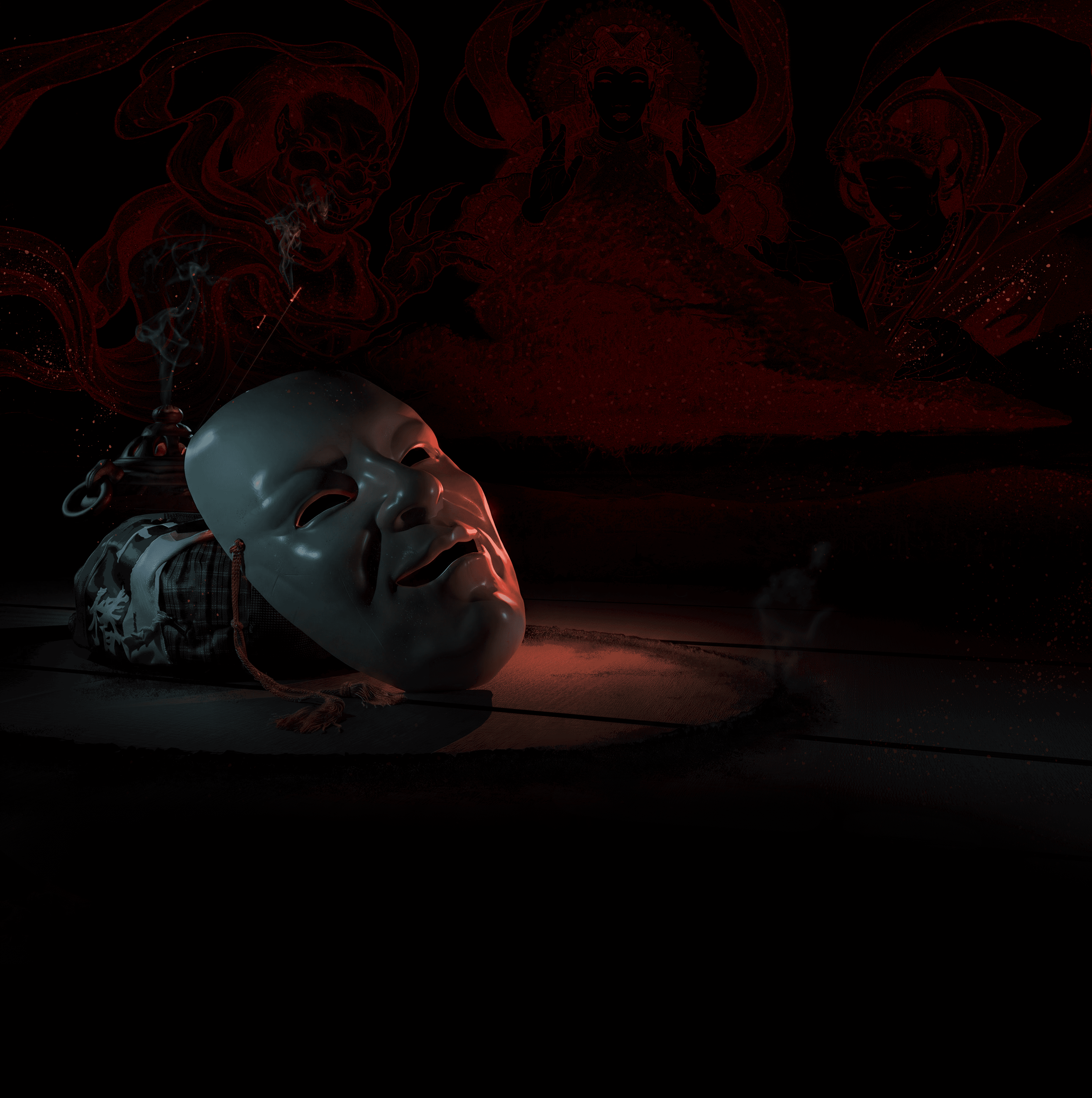
Near the back half of the room, a masked mime in flowing multicolored robes performed for a small circle of guests. A slight distraction for the auctioneer, but the presentation continued unfazed. The mime’s Noh mask, partially obscured by a cascade of white hair, conveyed a peaceful demeanor, with red and black paint strokes finely applied to the surface. The mime turned from one onlooker to another as hands traced shapes in the air: silent stories of fleeting beauty and wonder. The mime simulated opening an invisible window, stepping through, and shielding its eyes from an imaginary sun. A soft chuckle rippled through the crowd.


Above, within the theatre’s service corridors, the Unnamed moved soundlessly, pausing among rafters along a ventilation shaft. Its gaiter mask revealed only a narrow slip of eyes. Soft rubber tabi shoes muted every footfall, erasing the figure’s presence as it advanced.


The mime, perfectly timed, swept its arms outward, turning the invisible window into a flourish that captured every gaze. The coincidence favored the infiltrator. The Unnamed studied the crowd below, movements aligning with the misdirection.


The mime spun, robes a whirlwind of color, and bowed low, one gloved hand pointing imperceptibly toward the western hall, the only shadowed exit from the ballroom. A guest clapped enthusiastically, none the wiser of the crime soon to unfold. The mime’s next act beckoned a little girl from the crowd.


The performer crouched to meet her eyes, producing a delicate paper flower from thin air. Her gasp of awe rippled through the onlookers as the blooming lotus appeared to float between its white-gloved palms. When the child reached for the gift, the mime bowed gracefully, as if offering a blessing and farewell. Applause followed.


Meanwhile, the Unnamed slipped through a maintenance hatch into the elevator shaft, gloved hands gripping the edge while hovering just beneath the suspension assembly. A bike chain, looped with repurposed hooks, clinked softly against the pack as it latched to the steel cable above. The descent began, silent and deliberate, as the figure slid down several stories into shadow.


A hollow thud reverberated through the shaft as the Unnamed’s shoes met the roof of the motionless elevator car. They lowered themself into the empty compartment and eased the doors apart. Through the narrow gap, a glimpse emerged—Nakamura stepping out of a nearby restroom, straightening his tie as he made his way back toward the auction hall.


For a moment, the Unnamed’s reflection passed over the polished wall beside them, then vanished. When the light flickered back, Nakamura was already rounding the corner, patting at his jacket distractedly.


Beyond the threshold, every light in the theatre was trained upon the stage, leaving a corridor of darkness, the perfect path to the prize. Ahead lay the secured gallery, a pristine display case holding the coveted painting, reserved for the evening’s grand reveal. The infiltrator moved with mechanical precision, bypassing cameras and sensors with the ease of long practice, vanishing into the shadowed depository beyond. The room carried a muted echo of the atrium’s festivities, but inside there was no flourish, no color, only a sanctuary of historic relics preserved in stillness.


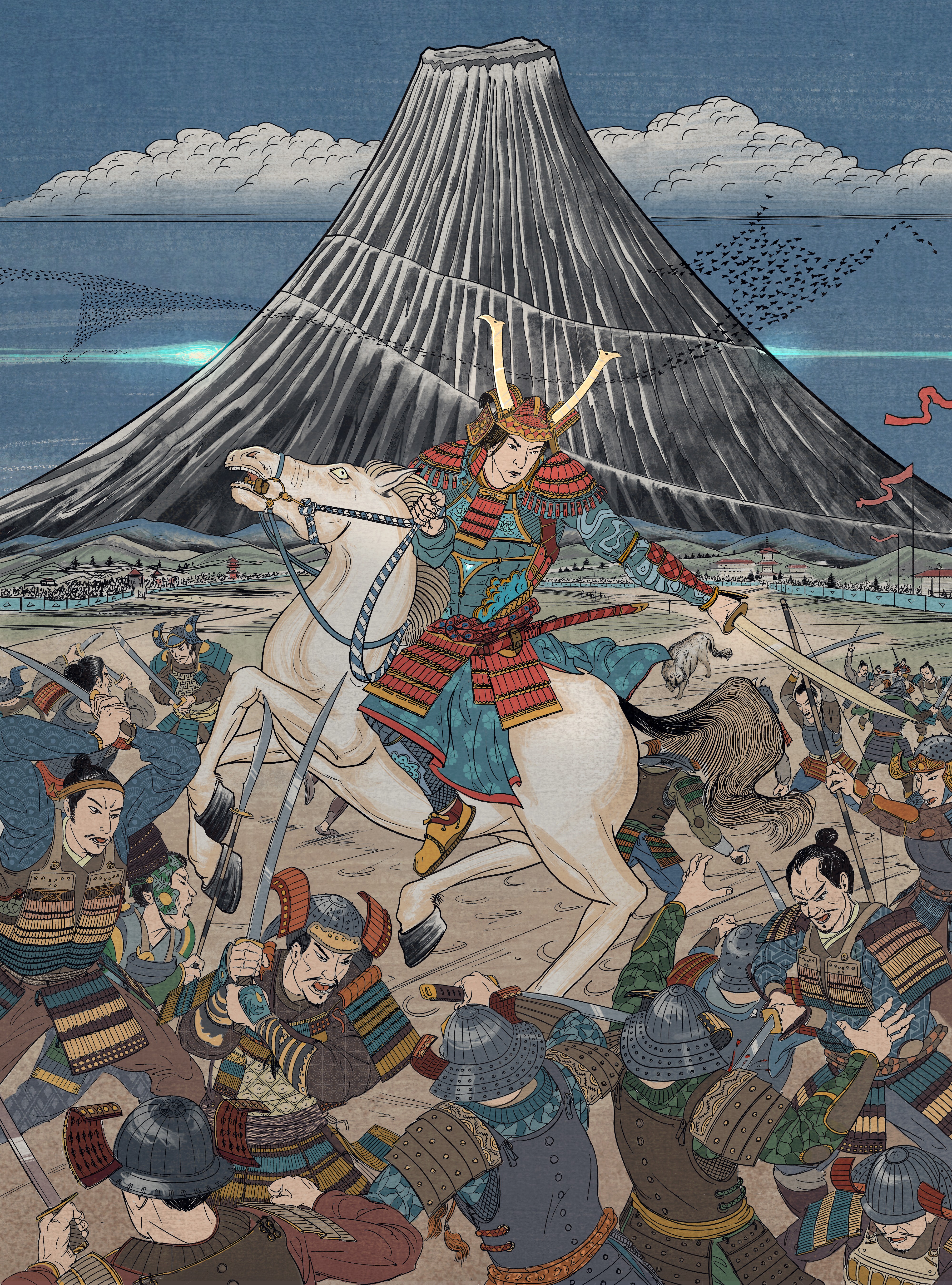
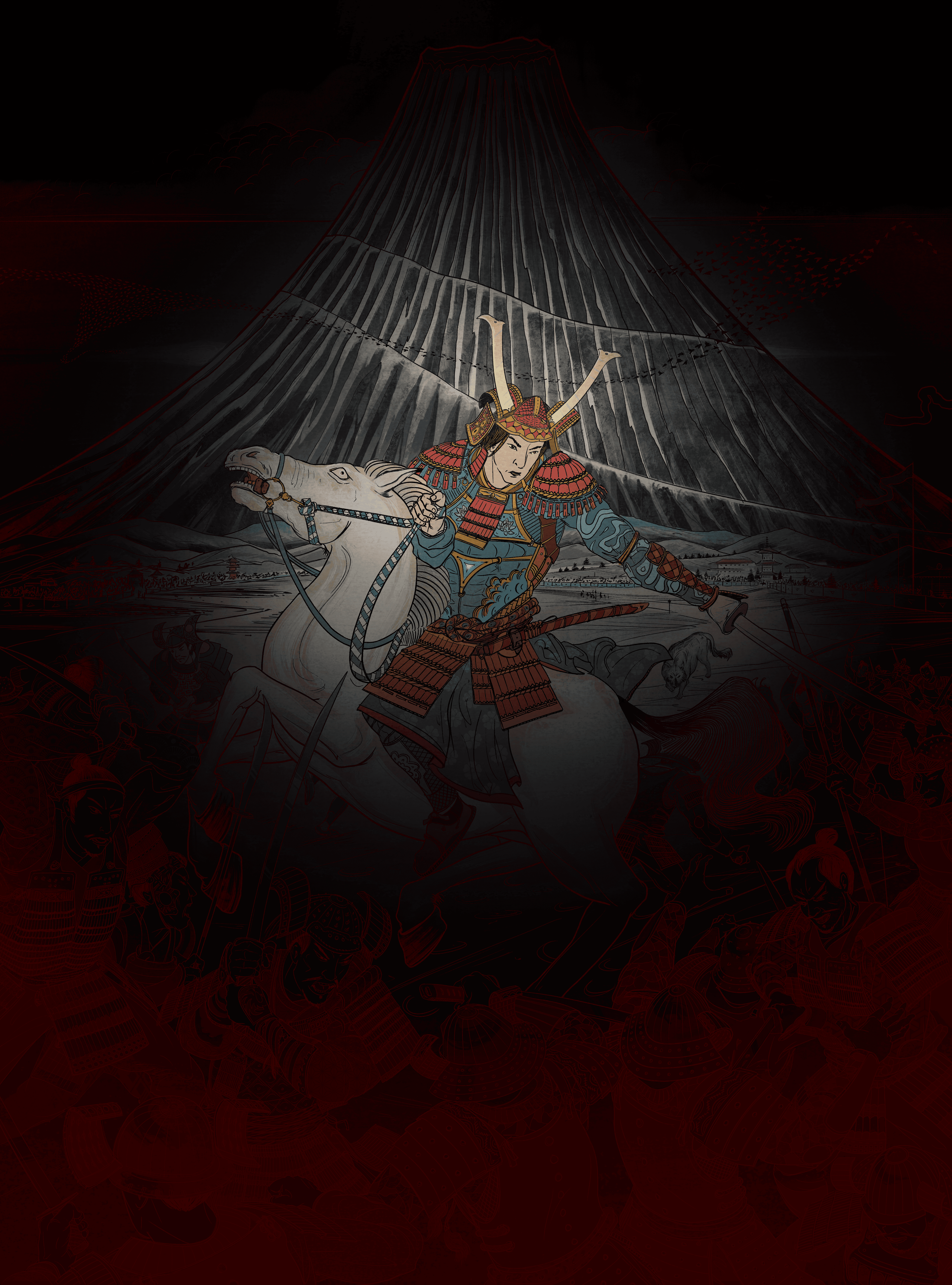
The Unnamed stood before the draped Kamakura masterpiece, their heartbeat outpacing the tick of their wristwatch. Slowly, the cloth lifted, revealing a breathtaking Japanese relic. They examined the surface. A shogun rode a majestic white horse, the animal lifting into a restrained rear while a vast battlefield engulfed the foreground.


Admiration didn’t even last a breath. A compact knife emerged. They extended their arm to untether it, but the motion stalled midway. The Unnamed squinted in the dim light. Something on the scroll's surface, as if eyes from within the scene were looking back into theirs. Then a surreal sensation of being utterly exposed, as perspiration began to collect on their brow.


The ink looked fresh. The brushstrokes seemed to ripple beneath the light.

The Unnamed shook off the absurdity: a trick of the light, they judged, but as gloved hands touched the frame—


—Flash!


An electrical surge blew out a utility light. In its wake came a scent the Unnamed recognized instantly: Hinoki.


The aroma was wood-warm, like freshly lit incense. Its presence was impossible in a windowless room of dust and cold metal. The smell resonated with their childhood home—half remembered.


They shook off the absurdity and realigned their focus.

They materialized a small lighter, providing enough light to extract the art. Quickly, they sliced the rigid threads that bound the scroll to the frame. Each cut rang perilously loud in the silence. The Unnamed’s eyes remained fixed, half-cast with anxiety and astonishment, ever watchful of the figures within the painting. No time to lose one’s nerve.


Onstage, the auctioneer’s voice swelled. “We will now unveil Haneyume’s coveted masterpiece! But first, Governor Nakamura and I wish to express our gratitude to Sama Hiramatsu for the generous donation…”

The Unnamed worked quickly, rolling the painting taut and securing it in a protective casing. The cylindrical sheath felt unnaturally warm in the Unnamed’s hands, an aura they had no explanation for. Seconds slipped away like grains of sand, leaving no time for wild fascinations.


Just before the auctioneer could continue, an attendant hurried to the stage and leaned in, speaking in a hush. The auctioneer raised a hand to the crowd, signaling a brief delay. His expression shifted from curiosity to astonishment, just as Nakamura returned to his side, arriving in time to hear the news.


“This is remarkable,” the auctioneer announced, voice bright with surprise. “The bid for our final item of the night has just surpassed its opening price by more than twenty times!” A ripple of murmurs spread through the hall. “It would seem the painting remembers its owner before it’s even claimed,” he added softly, turning to exchange quiet remarks with a few esteemed guests at the front.


“Bring forward the item, please!” the auctioneer commanded with ceremonial grandeur. The moment had come. The crowd held its breath, suspended in anticipation. A cold rush surged through the Unnamed.


The cloth fell back over the frame in haste, arranged with deceptive care. The Unnamed flattened against the wall, body merging with the architecture’s shadows. They steadied their breath. Every muscle waited.

A doorway glowed at the edge of the room. An attendant entered, polished shoes echoing across the floor, their face neutral with duty. As commanded, the attendant lifted the covered frame and carried it into the ballroom.


Onstage, the attendant set the piece upon the easel beside Nakamura. The audience hushed.


“Ladies and gentlemen,” the auctioneer proclaimed, “I give you—”

With a flourish, the cloth fell away.


The reveal was anything but expected. Instead of the prized Kamakura-period work, the canvas displayed a grotesque caricature of Nakamura himself, painted in garish, mocking color.


The crowd froze. Confusion and disbelief swelled like a wave breaking over the hall.


“What in the hell is that?” a voice from the back shouted. Laughter thundered.


Adjacent to the chaos, the Unnamed was already scaling the scaffolding at ground level, the area drowned in shadow beneath the great banner now used as formidable cover. Gloved hands gripped the steel rungs with exactness. At the infiltrator’s side, the chain coiled like a waiting serpent; across the back, the stolen painting lay secured within its casing.


Guards shouted below, radios crackling. A few with flashlights at the ready.


“There! behind the banner!” cried a woman from the audience. One of the guards took the woman’s cue, tracing massive folds of the banner with their flashlight. A foot slipped at the moment of exposure; the Unnamed pressed flat against the framework before the crowd could react.


All at once, suits and badges broke formation, surging into full pursuit to arrest the intruder. On the main floor, the elevator panel blinked lifelessly, disabled earlier.


“They rigged it,” a guard barked. “Stairs. move!” Boots thundered as the Unnamed climbed higher, rising through the haze and heat of the alarms.


A narrow hallway opened beyond the top floor. The Unnamed catapulted from the scaffold onto solid ground, walls lined with portraits and abstract art. The Unnamed moved like a bolt, steps near-soundless. Footfalls thundered nearby, just steps below them. A guard lunged, catching the elusive figure’s shoulder.


Reacting on instinct, the Unnamed whipped the bike chain from its holster. The hooked end lashed out, catching the guard’s arm. A sharp tug sent the man sprawling, radio clattering across the floor.


Through the comms came a shout: “Third floor, near the conference room!”


The Unnamed sprinted down the corridor, a hooked dagger concealed in their waistband. Another guard appeared and collided with the intruder, slamming into the wall in a blur of breath and motion. A flash of metal. The curved blade arced upward, leaving a crimson mark across the attacker’s cheek. Blood spattered the polished tiles. The man dropped instantly, frozen by the shock of the strike.


The chase wound through a maze of rooms: an archival vault, an exit stairwell, and a final door bursting open to the rooftop. The night met the intruder in a wash of wind and city light, followed immediately by the scent of damp concrete and distant seawater. They looked out into Ikebukuro’s neon horizon, as one final leap stood between them and safety.


“He’s on the roof!” a voice shouted from below, the Metro’s skylights turning the rooftop into a stage for the stunned onlookers beneath.


The rooftop door burst open behind them. Orders rang out: “Freeze! Don’t move!”

Movement answered instead. The Unnamed sprinted for the edge on sheer instinct, pulling a small, metal tin from the bag. In one swift motion, the device hit the ground.


A concussive pop shattered the skylight. Magenta smoke erupted across the roof, glass raining down as the haze twisted into motion. Officers staggered, blinded by color and glare, boots scraping for purchase.

A shape cut through the fog, low and spectral. A hand caught the ledge. Weight shifted. Then a body flowed over the edge and vanished into the smoke.


The roof became a stage of shimmering chaos, and its star performer disappeared into the storm they had conjured.


The event guards stood frozen, staring into the night, hands shielding their faces from the dye still hanging in the air. One guard stepped forward cautiously, peering over the edge at the impossibility below. How did they escape? the guard wondered. Did they catch a wire on the fall? Or did the phantom just grow wings and fly?

“You’ve got to be kidding me. You let them get away!?” the second guard said, shaking his head in disbelief. The first backed away from the ledge, retreating from the vertigo and the ghost of what he’d just seen.


When the smoke cleared, only footprints remained at the ledge. Far below, Pink rain fell through the atrium, like the night itself bleeding down.


Nakamura stood motionless on the stage, dumbfounded.

In a back alley, the Unnamed landed in silence, chain already coiled and gear reduced to essentials. The stained hoodie disappeared into a dumpster, revealing a plain black shirt. The painting remained sealed in its tube. A concealed motorcycle and a brown leather jacket resting on its seat waited beneath a weathered tarp.

A pull of canvas, a turn of key, an engine’s growl: the night devouring the sound.
 

CHAPTER 1 — EXHIBITION


Valet staff moved swiftly outside the Tokyo Metropolitan Theatre as Tokyo’s elite stepped into the glow. A black Mercedes pulled up to the curb, its doors opening promptly as a couple stepped out, he in a sharp tailcoat, she adjusting her silk gloves against the lingering chill from a summer storm. Rainwater clung to the glass awning above, catching the glow of streetlights in fractured glints. The storm had broken an hour earlier, leaving the city washed and reflective, as if Tokyo itself had dressed for the occasion.


Inside, the lobby shimmered beneath the theater’s vast glass canopy. A forty-foot banner hung near the mezzanine, announcing a theatrical epic of the year 1999, its bold kanji painted in sweeping brushstrokes. Soft lighting pooled along staircases and alcoves, highlighting curated art displays for the evening’s event.


This year’s auction was hosted by Tokyo’s Governor, Hideo Nakamura, also chairman of the Urban Renewal Subcommittee, a firmly established political figure praised for cultural revitalization, though his alliances remained quietly unexamined. Nakamura’s tall stature loomed over the crowd, moving with the authority of an orchestral conductor as he drifted between auction representatives and staff. He carried the polished veneer of a modern statesman: slicked-back black hair, wayfarer-style glasses perched neatly on the bridge of his nose, and a tailored suit that framed his confidence as much as it concealed his intentions.


At the center of the room stood the auction stage, a draped painting awaiting its moment in the spotlight. Nakamura conferred with the auctioneer and an event host, their laughter echoing through the atrium, a performance as polished as the evening itself.


A pair of couples near the bar murmured in low tones, their conversation drifting toward the night’s benefactor.


“Do you really think he’s putting that money into redevelopment?” one woman asked, swirling her drink.

“Hardly,” her companion said. “He’s servicing other interests. Rumor has it he’s turning the old Shibuya district into a commercial park.”

“No. Not near Hyakkendana? You can’t be serious,” she replied.

The older man gave a knowing nod, a hint of frustration in his eyes.


Somewhere outside, a faint metallic clang echoed, barely audible above the theatre’s grandeur. Inside, the chatter continued undisturbed.


Soft footsteps landed on a fire escape, then vanished as the Unnamed, cloaked in black trackwear and a motorcycle-style gaiter, scaled the building’s exterior with silent precision. The only sign they existed at all was a muted glint of metal at the waistband, and a retracted steel line cinched around their wrists. A patrolling attendant passed a glass window just as a shadow flickered upward beyond it, unnoticed. The ascent carried on, swallowed by celebratory rhythm.


Onstage, the auctioneer tested the microphone, his mouth pulled wide in a smile. His round cheeks lent him an inviting presence as he courteously offered a series of bows to the audience. He cleared his throat while adjusting his bow tie, then began.


“Friends and colleagues,” came the cordial greeting. “We will now reveal the winners of tonight’s Silent Auction, featuring the Crown Jewel, a one-of-a-kind Kamakura-period painting by Akihiro Haneyume, meticulously preserved and of enormous historical significance. A painting most notable for its unusually advanced treatment of perspective and proportion, which is simply unrivaled for its time.” The auctioneer nodded appreciatively. His frizzy white hair held its immaculate shape, and his silver oval glasses flared with reflected spotlights.


Applause rippled through the crowd as attention turned toward the stage. Nakamura stood beside the Auctioneer, dwarfing him in height, clapping in satisfaction, grin practiced and bright beneath the lights. He nodded back to the Auctioneer in approval.


“But first, we will begin the evening with a magnificent portrait by sixteenth-century Dutch master Frans Hals. The benefactor of this distinguished piece wishes to say a few words…” The auctioneer’s voice carried with rehearsed poise as the velvet cover drew back to reveal the painting. The remaining works awaited their turn, secured within the Gallery Depository down the hall.


Governor Nakamura signaled that he would return shortly, offering a polite nod to a nearby security guard before stepping away.


Near the back half of the room, a masked mime in flowing multicolored robes performed for a small circle of guests. A slight distraction for the auctioneer, but the presentation continued unfazed. The mime’s Noh mask, partially obscured by a cascade of white hair, conveyed a peaceful demeanor, with red and black paint strokes finely applied to the surface. The mime turned from one onlooker to another as hands traced shapes in the air: silent stories of fleeting beauty and wonder. The mime simulated opening an invisible window, stepping through, and shielding its eyes from an imaginary sun. A soft chuckle rippled through the crowd.


Above, within the theatre’s service corridors, the Unnamed moved soundlessly, pausing among rafters along a ventilation shaft. Its gaiter mask revealed only a narrow slip of eyes. Soft rubber tabi shoes muted every footfall, erasing the figure’s presence as it advanced.


The mime, perfectly timed, swept its arms outward, turning the invisible window into a flourish that captured every gaze. The coincidence favored the infiltrator. The Unnamed studied the crowd below, movements aligning with the misdirection.


The mime spun, robes a whirlwind of color, and bowed low, one gloved hand pointing imperceptibly toward the western hall, the only shadowed exit from the ballroom. A guest clapped enthusiastically, none the wiser of the crime soon to unfold. The mime’s next act beckoned a little girl from the crowd.


The performer crouched to meet her eyes, producing a delicate paper flower from thin air. Her gasp of awe rippled through the onlookers as the blooming lotus appeared to float between its white-gloved palms. When the child reached for the gift, the mime bowed gracefully, as if offering a blessing and farewell. Applause followed.


Meanwhile, the Unnamed slipped through a maintenance hatch into the elevator shaft, gloved hands gripping the edge while hovering just beneath the suspension assembly. A bike chain, looped with repurposed hooks, clinked softly against the pack as it latched to the steel cable above. The descent began, silent and deliberate, as the figure slid down several stories into shadow.


A hollow thud reverberated through the shaft as the Unnamed’s shoes met the roof of the motionless elevator car. They lowered themself into the empty compartment and eased the doors apart. Through the narrow gap, a glimpse emerged—Nakamura stepping out of a nearby restroom, straightening his tie as he made his way back toward the auction hall.


For a moment, the Unnamed’s reflection passed over the polished wall beside them, then vanished. When the light flickered back, Nakamura was already rounding the corner, patting at his jacket distractedly.


Beyond the threshold, every light in the theatre was trained upon the stage, leaving a corridor of darkness, the perfect path to the prize. Ahead lay the secured gallery, a pristine display case holding the coveted painting, reserved for the evening’s grand reveal. The infiltrator moved with mechanical precision, bypassing cameras and sensors with the ease of long practice, vanishing into the shadowed depository beyond. The room carried a muted echo of the atrium’s festivities, but inside there was no flourish, no color, only a sanctuary of historic relics preserved in stillness.


The Unnamed stood before the draped Kamakura masterpiece, their heartbeat outpacing the tick of their wristwatch. Slowly, the cloth lifted, revealing a breathtaking Japanese relic. They examined the surface. A shogun rode a majestic white horse, the animal lifting into a restrained rear while a vast battlefield engulfed the foreground.


Admiration didn’t even last a breath. A compact knife emerged. They extended their arm to untether it, but the motion stalled midway. The Unnamed squinted in the dim light. Something on the scroll's surface, as if eyes from within the scene were looking back into theirs. Then a surreal sensation of being utterly exposed, as perspiration began to collect on their brow.


The ink looked fresh. The brushstrokes seemed to ripple beneath the light.

The Unnamed shook off the absurdity: a trick of the light, they judged, but as gloved hands touched the frame—


—Flash!


An electrical surge blew out a utility light. In its wake came a scent the Unnamed recognized instantly: Hinoki.


The aroma was wood-warm, like freshly lit incense. Its presence was impossible in a windowless room of dust and cold metal. The smell resonated with their childhood home—half remembered.


They shook off the absurdity and realigned their focus.

They materialized a small lighter, providing enough light to extract the art. Quickly, they sliced the rigid threads that bound the scroll to the frame. Each cut rang perilously loud in the silence. The Unnamed’s eyes remained fixed, half-cast with anxiety and astonishment, ever watchful of the figures within the painting. No time to lose one’s nerve.


Onstage, the auctioneer’s voice swelled. “We will now unveil Haneyume’s coveted masterpiece! But first, Governor Nakamura and I wish to express our gratitude to Sama Hiramatsu for the generous donation…”

The Unnamed worked quickly, rolling the painting taut and securing it in a protective casing. The cylindrical sheath felt unnaturally warm in the Unnamed’s hands, an aura they had no explanation for. Seconds slipped away like grains of sand, leaving no time for wild fascinations.


Just before the auctioneer could continue, an attendant hurried to the stage and leaned in, speaking in a hush. The auctioneer raised a hand to the crowd, signaling a brief delay. His expression shifted from curiosity to astonishment, just as Nakamura returned to his side, arriving in time to hear the news.


“This is remarkable,” the auctioneer announced, voice bright with surprise. “The bid for our final item of the night has just surpassed its opening price by more than twenty times!” A ripple of murmurs spread through the hall. “It would seem the painting remembers its owner before it’s even claimed,” he added softly, turning to exchange quiet remarks with a few esteemed guests at the front.


“Bring forward the item, please!” the auctioneer commanded with ceremonial grandeur. The moment had come. The crowd held its breath, suspended in anticipation. A cold rush surged through the Unnamed.


The cloth fell back over the frame in haste, arranged with deceptive care. The Unnamed flattened against the wall, body merging with the architecture’s shadows. They steadied their breath. Every muscle waited.

A doorway glowed at the edge of the room. An attendant entered, polished shoes echoing across the floor, their face neutral with duty. As commanded, the attendant lifted the covered frame and carried it into the ballroom.


Onstage, the attendant set the piece upon the easel beside Nakamura. The audience hushed.


“Ladies and gentlemen,” the auctioneer proclaimed, “I give you—”

With a flourish, the cloth fell away.


The reveal was anything but expected. Instead of the prized Kamakura-period work, the canvas displayed a grotesque caricature of Nakamura himself, painted in garish, mocking color.


The crowd froze. Confusion and disbelief swelled like a wave breaking over the hall.


“What in the hell is that?” a voice from the back shouted. Laughter thundered.


Adjacent to the chaos, the Unnamed was already scaling the scaffolding at ground level, the area drowned in shadow beneath the great banner now used as formidable cover. Gloved hands gripped the steel rungs with exactness. At the infiltrator’s side, the chain coiled like a waiting serpent; across the back, the stolen painting lay secured within its casing.


Guards shouted below, radios crackling. A few with flashlights at the ready.


“There! behind the banner!” cried a woman from the audience. One of the guards took the woman’s cue, tracing massive folds of the banner with their flashlight. A foot slipped at the moment of exposure; the Unnamed pressed flat against the framework before the crowd could react.


All at once, suits and badges broke formation, surging into full pursuit to arrest the intruder. On the main floor, the elevator panel blinked lifelessly, disabled earlier.


“They rigged it,” a guard barked. “Stairs. move!” Boots thundered as the Unnamed climbed higher, rising through the haze and heat of the alarms.


A narrow hallway opened beyond the top floor. The Unnamed catapulted from the scaffold onto solid ground, walls lined with portraits and abstract art. The Unnamed moved like a bolt, steps near-soundless. Footfalls thundered nearby, just steps below them. A guard lunged, catching the elusive figure’s shoulder.


Reacting on instinct, the Unnamed whipped the bike chain from its holster. The hooked end lashed out, catching the guard’s arm. A sharp tug sent the man sprawling, radio clattering across the floor.


Through the comms came a shout: “Third floor, near the conference room!”


The Unnamed sprinted down the corridor, a hooked dagger concealed in their waistband. Another guard appeared and collided with the intruder, slamming into the wall in a blur of breath and motion. A flash of metal. The curved blade arced upward, leaving a crimson mark across the attacker’s cheek. Blood spattered the polished tiles. The man dropped instantly, frozen by the shock of the strike.


The chase wound through a maze of rooms: an archival vault, an exit stairwell, and a final door bursting open to the rooftop. The night met the intruder in a wash of wind and city light, followed immediately by the scent of damp concrete and distant seawater. They looked out into Ikebukuro’s neon horizon, as one final leap stood between them and safety.


“He’s on the roof!” a voice shouted from below, the Metro’s skylights turning the rooftop into a stage for the stunned onlookers beneath.


The rooftop door burst open behind them. Orders rang out: “Freeze! Don’t move!”

Movement answered instead. The Unnamed sprinted for the edge on sheer instinct, pulling a small, metal tin from the bag. In one swift motion, the device hit the ground.


A concussive pop shattered the skylight. Magenta smoke erupted across the roof, glass raining down as the haze twisted into motion. Officers staggered, blinded by color and glare, boots scraping for purchase.

A shape cut through the fog, low and spectral. A hand caught the ledge. Weight shifted. Then a body flowed over the edge and vanished into the smoke.


The roof became a stage of shimmering chaos, and its star performer disappeared into the storm they had conjured.


The event guards stood frozen, staring into the night, hands shielding their faces from the dye still hanging in the air. One guard stepped forward cautiously, peering over the edge at the impossibility below. How did they escape? the guard wondered. Did they catch a wire on the fall? Or did the phantom just grow wings and fly?

“You’ve got to be kidding me. You let them get away!?” the second guard said, shaking his head in disbelief. The first backed away from the ledge, retreating from the vertigo and the ghost of what he’d just seen.


When the smoke cleared, only footprints remained at the ledge. Far below, Pink rain fell through the atrium, like the night itself bleeding down.


Nakamura stood motionless on the stage, dumbfounded.

In a back alley, the Unnamed landed in silence, chain already coiled and gear reduced to essentials. The stained hoodie disappeared into a dumpster, revealing a plain black shirt. The painting remained sealed in its tube. A concealed motorcycle and a brown leather jacket resting on its seat waited beneath a weathered tarp.

A pull of canvas, a turn of key, an engine’s growl: the night devouring the sound.

 

THE STORY

Renjiro Karasuma remembers only one thing from his childhood: his sister, Sora. After retrograde amnesia erased his early life, she became his only constant, until she vanished without a trace.


Years later, Ren uncovers a conspiracy tied to Tokyo’s redevelopment projects, where families disappear, identities are erased, and transcendent works of art seem to awaken. As reality begins to fray at the edges, Ren and his childhood friend Sena are drawn into a supernatural mystery that defies history and time itself. What begins as a search for answers soon leads Ren toward the hidden truths surrounding the Ghostmark.

SCENE 1

SCENE 1

The horizon stills,

ghosts of time shift in the stream,

the new rise unseen

—Unknown

The horizon stills,

ghosts of time shift in the stream,

the new rise unseen

—Unknown

Renjiro Karasuma remembers only one thing from his childhood: his sister, Sora. After retrograde amnesia erased his early life, she became his only constant, until she vanished without a trace.


Years later, Ren uncovers a conspiracy tied to Tokyo’s redevelopment projects, where families disappear, identities are erased, and transcendent works of art seem to awaken. As reality begins to fray at the edges, Ren and his childhood friend Sena are drawn into a supernatural mystery that defies history and time itself. What begins as a search for answers soon leads Ren toward the hidden truths surrounding the Ghostmark.

THE STORY

© 2026 SprayNation LLC. All Rights Reserved.

© 2026 SprayNation LLC. All Rights Reserved.

ENTER THE SHINKAI

ENTER THE SHINKAI

ENTER THE SHINKAI